In 1957, a 38-year-old Danish architect named Jørn Utzon submitted a sketch to an international competition. He had never built anything of significance. His drawing showed a series of white sail-like shells rising from Bennelong Point on Sydney Harbour, and the judges, led by Eero Saarinen, threw out every other entry and declared it the winner immediately. It was, Saarinen said, the most beautiful building he had ever seen on paper. Getting it built would take another sixteen years, cost fourteen times the original budget, and nearly destroy the man who designed it.
The Sydney Opera House is the story of what happens when an uncompromising vision collides with political reality. Utzon had designed a building that no one knew how to build. The shells were not geometrically regular. Each one was a section of a sphere, but no two were identical. Engineers spent four years trying to calculate the structural forces, eventually discovering that the shells could be derived from a single mathematical curve — the same curve that describes an orange peel when you cut it. That discovery, made in 1961, saved the project from cancellation.
The Geometry of the Impossible
Utzon worked with engineer Ove Arup to develop a system of precast concrete ribs that could be assembled into the final shell forms. Each rib was cast off-site, transported by barge, and lifted into position by crane. The outer surface is covered in 1,056,006 custom-made Swedish ceramic tiles, glazed white and cream to reflect the changing light of the harbour. At dawn, the shells glow pink. At noon, they blaze white. At dusk, they turn amber against the water.
The building was supposed to cost £5.5 million and open in 1963. It actually cost £102 million and opened in 1973. Utzon was forced to resign in 1966 by a hostile New South Wales government that refused to honor its financial commitments. He never returned to Australia and never saw the completed building in person. It was only in the late 1990s that his son Jan Utzon was brought back as a consultant, and the architect received a belated apology from the same government that had driven him out.

A Building That Refused to Fail
Today, the Sydney Opera House is a UNESCO World Heritage Site and one of the most recognizable buildings on the planet. It hosts more than 1,500 performances each year and welcomes over 8 million visitors. More importantly, it proved that architecture can be both technically innovative and emotionally transcendent. Utzon did not design a building. He designed a symbol.
The Sail on Your Desk
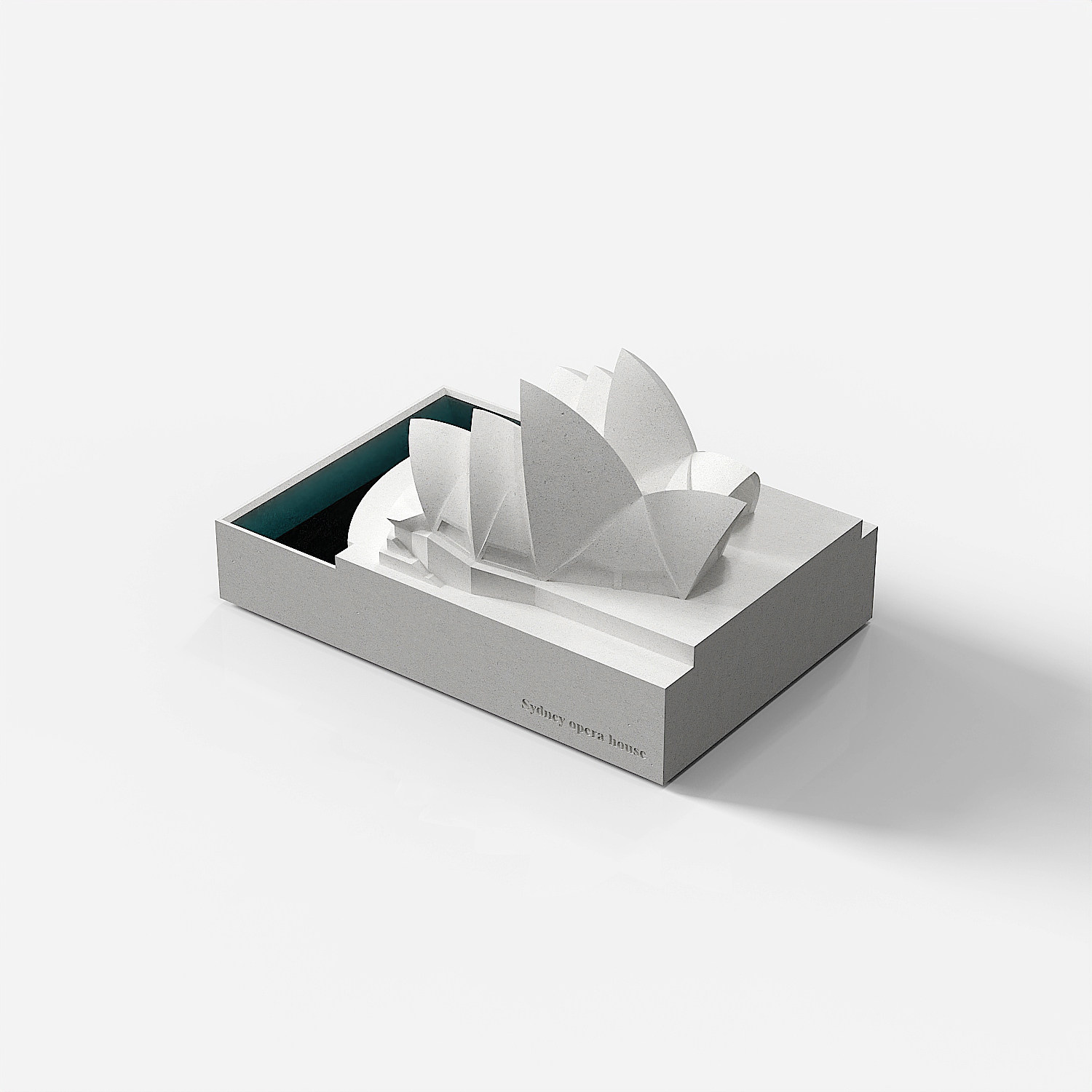
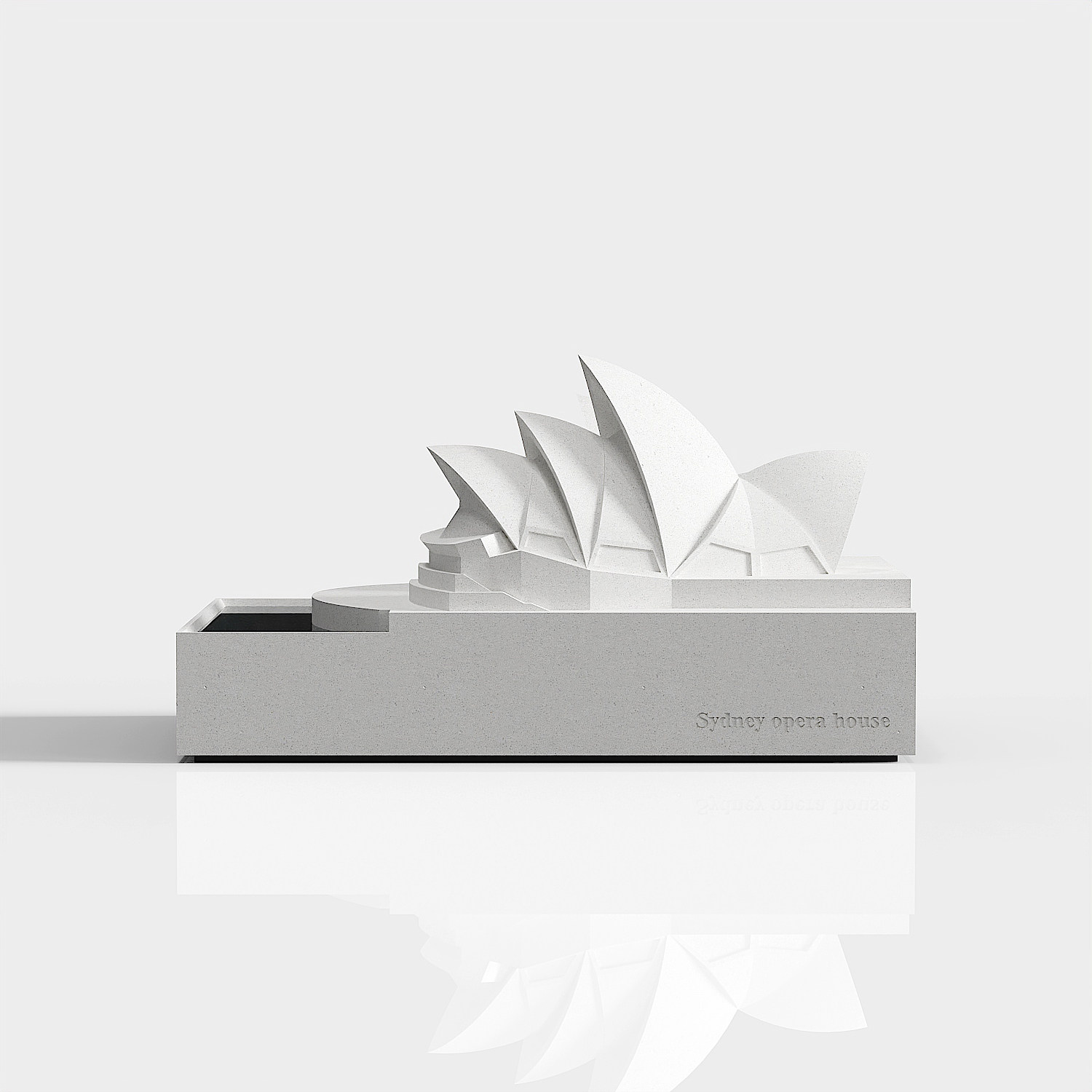
Our Sydney Opera House miniature distills the drama of those sails into a sculptural object you can hold. Hand-cast from fair-faced concrete and set on a walnut base, it captures the intersecting geometries of Utzon shells with remarkable fidelity. The interplay of light and shadow across the shell surfaces changes throughout the day, just as it does on the real building.
Place it on a bookshelf, a windowsill, or your desk. It is a reminder that the most ambitious visions sometimes take decades to realize, but when they do, they change everything.
Product Details
- Material: Premium fair-faced architectural concrete
- Base: Solid walnut wood
- Dimensions: 170mm × 100mm × H 85mm
- Weight: 950g
- Handmade, each piece is unique
Explore more handcrafted concrete architectural models inspired by landmark buildings.