Handcrafted concrete architectural model inspired by Gordon Bunshaft’s Beinecke Library.
A memorable building can be recognized before every detail is understood. Reduced to a compact concrete object, its strongest relationships become easier to see: solid and void, rhythm and interruption, weight and light.
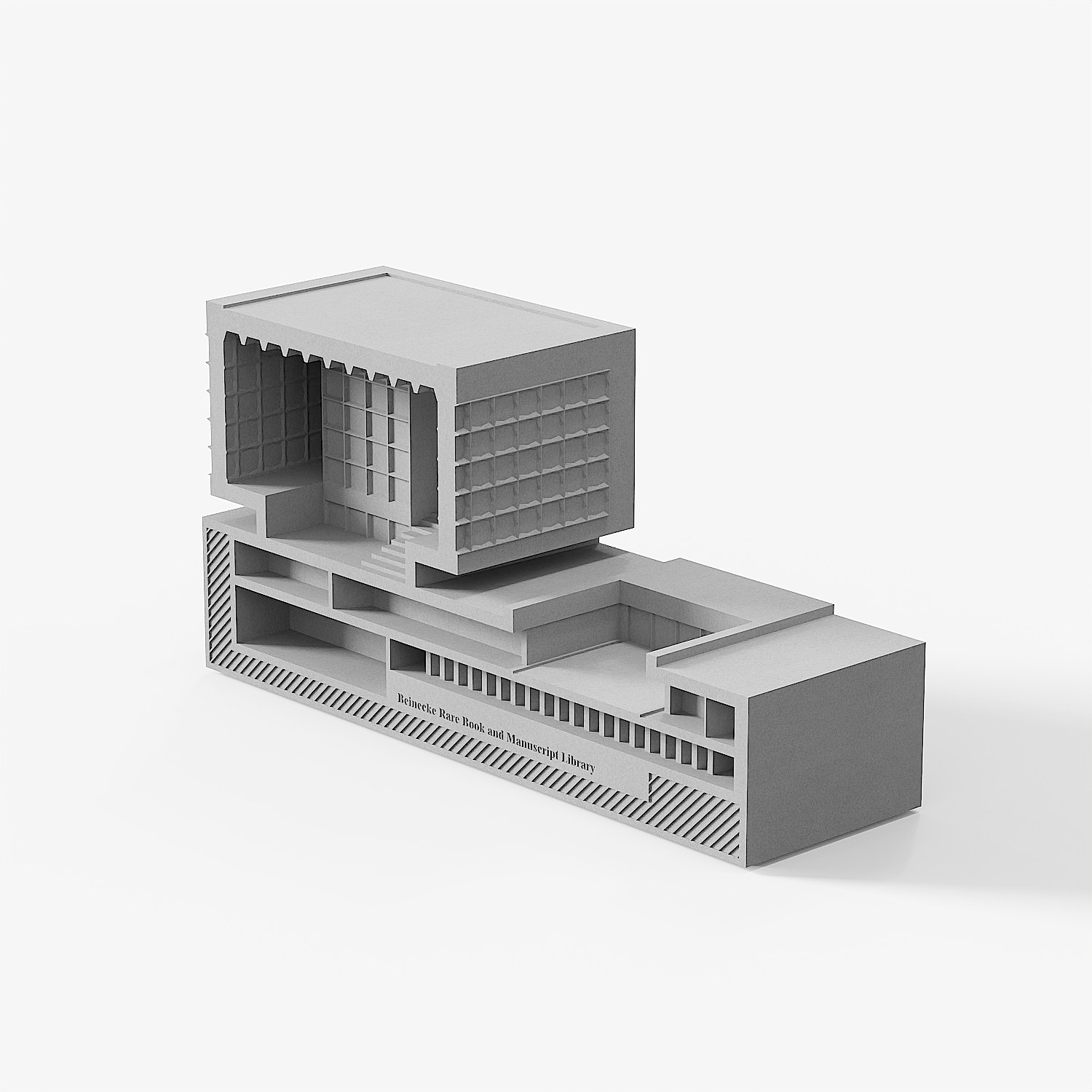
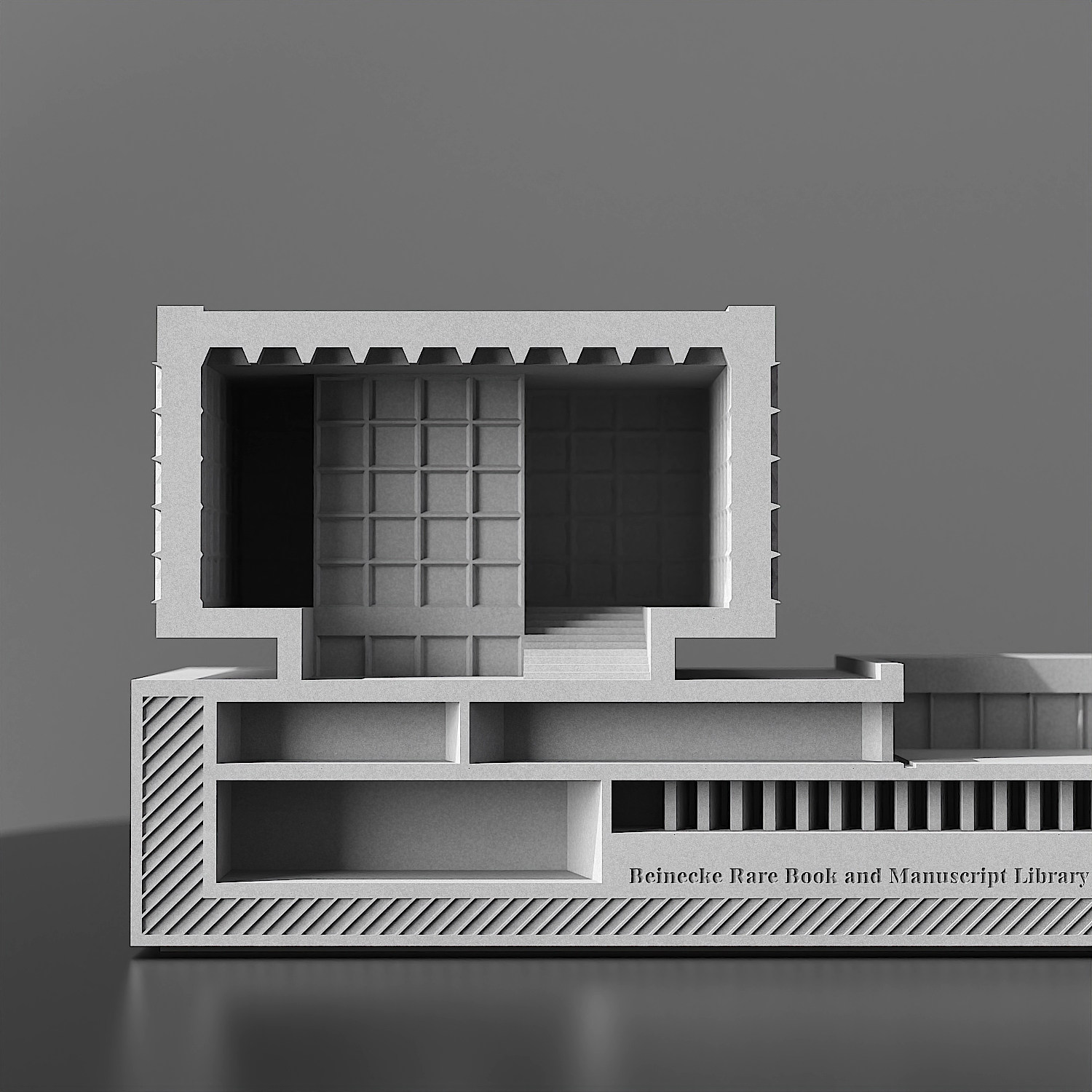
Reading the form of Beinecke Rare Book Library
Beinecke Rare Book Library Concrete Model is a handcrafted miniature inspired by Gordon Bunshaft’s luminous modernist library at Yale.
The strongest reading of Beinecke Library comes from comparing several viewpoints. Frontality establishes order, while an oblique angle shows how separate masses meet and where shadows deepen.
Why concrete suits the idea
The geometry of Beinecke Library benefits from a material with visual weight. Matte concrete holds shadow along cuts and projections, making depth easier to judge at model scale.
Look closely at Beinecke Library and the cast surface reveals small shifts in tone and texture. These variations distinguish real concrete from painted resin without distracting from the underlying geometry.
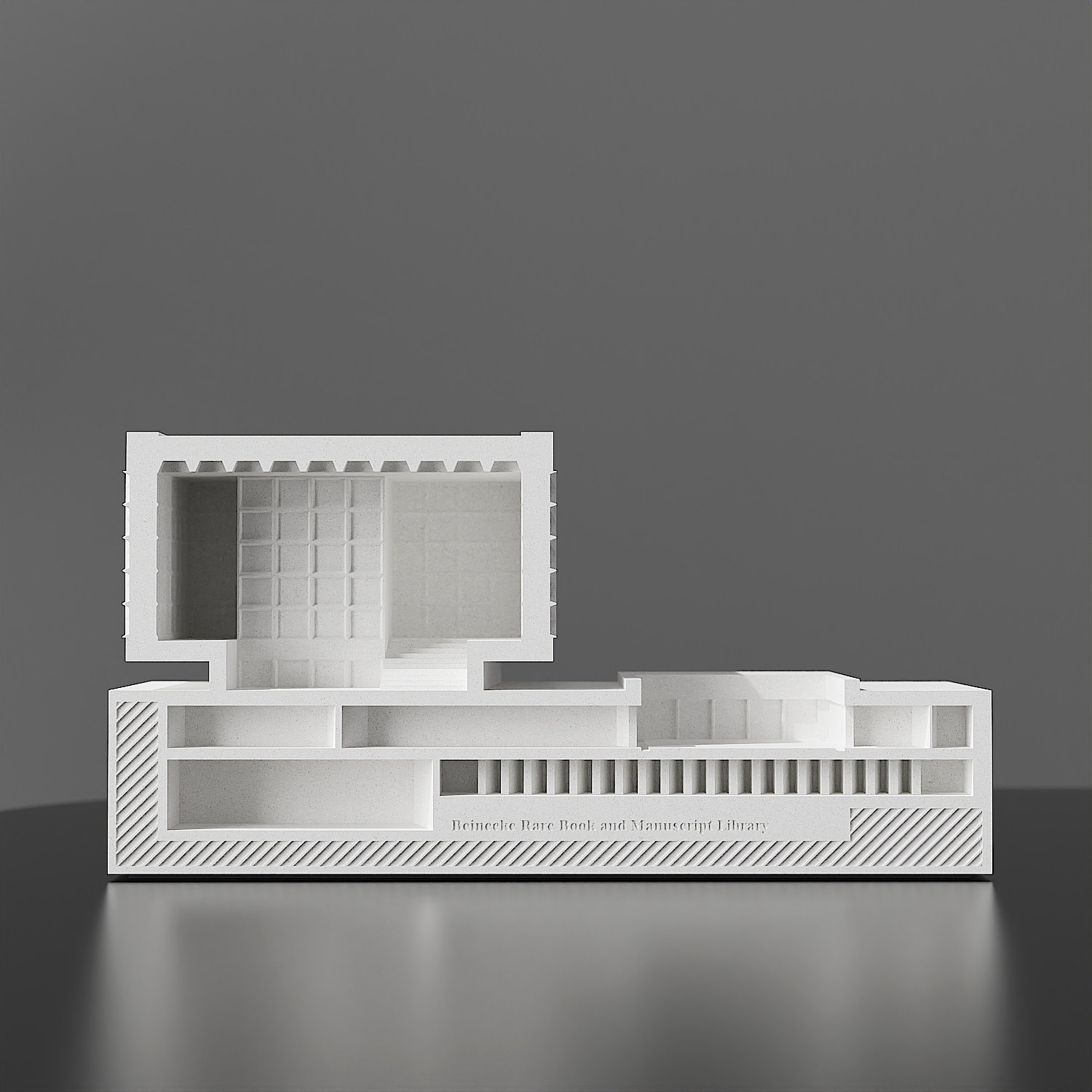
What to notice from different viewpoints
Use the front of Beinecke Library to understand order, then inspect the corners where separate planes meet. Those transitions often explain more about the architecture than a single centered view.
Beinecke Library rewards a full walk around its 20 × 6 × 10 cm form. What appears dense from one side may open into courts, recesses, or layered planes from another.
Scale, shadow, and close viewing
At 20 × 6 × 10 cm, Beinecke Library can be examined at close range without losing the presence of the original idea. Real depth and moving shadows make the object more informative than a fixed photograph.
This makes Beinecke Rare Book Library Concrete Model useful both as a decorative object and as a compact study in material and form. It can stand alone or sit within a collection of architecture, books, and design references.
Where it works
Beinecke Library benefits from a stable surface, a clear outline, and light arriving from one side. Avoid crowding the 20 × 6 × 10 cm object between taller pieces that block its profile.
Within Myron Design, Beinecke Library connects most clearly to Architectural Concrete Models. That relationship makes it useful as the starting point for a focused group of objects with different profiles.
Styling concrete with other materials
Place Beinecke Library beside an architecture monograph, drawing tools, or one simpler volume rather than a row of equally detailed objects. Variation in height keeps the shelf readable.
Use material contrast around Beinecke Library rather than matching everything to concrete. A wooden shelf, metal bookend, or pale ceramic object can make its mineral finish more deliberate.
Details to check before choosing
- Material: Fine concrete
- Dimensions: 20 × 6 × 10 cm
- Weight: 1.336 kg
Beinecke Library measures 20 × 6 × 10 cm and has approximately 1.336 kg; those figures matter on narrow shelves and lightweight furniture. Routine care is limited to dry, gentle dusting.
A considered object for architecture and design enthusiasts
Beinecke Rare Book Library Concrete Model is suited to collectors, architects, students, and anyone who prefers objects with a clear material identity. Its value comes from the combination of recognizable form, practical scale, and the quiet variation of hand-cast concrete.
View the complete image gallery, current price, dimensions, and availability on the Beinecke Rare Book Library Concrete Model product page.