In a quiet residential neighborhood in Ibaraki, Osaka, a concrete box sits unassumingly beside a humble wooden chapel. There is no grand facade, no soaring steeple. Passersby would never guess that inside this modest structure lies one of the most transcendent spaces in modern architecture — a room where a cross of light cuts through darkness, born from nothing but a slit in the wall.
The Commission
In 1987, the Ibaraki Kasugaoka Church approached a young architect named Tadao Ando. Their congregation was small, their budget even smaller. The site was narrow, tucked between existing buildings, and faced a busy road. Most architects would have seen constraints. Ando saw an opportunity.
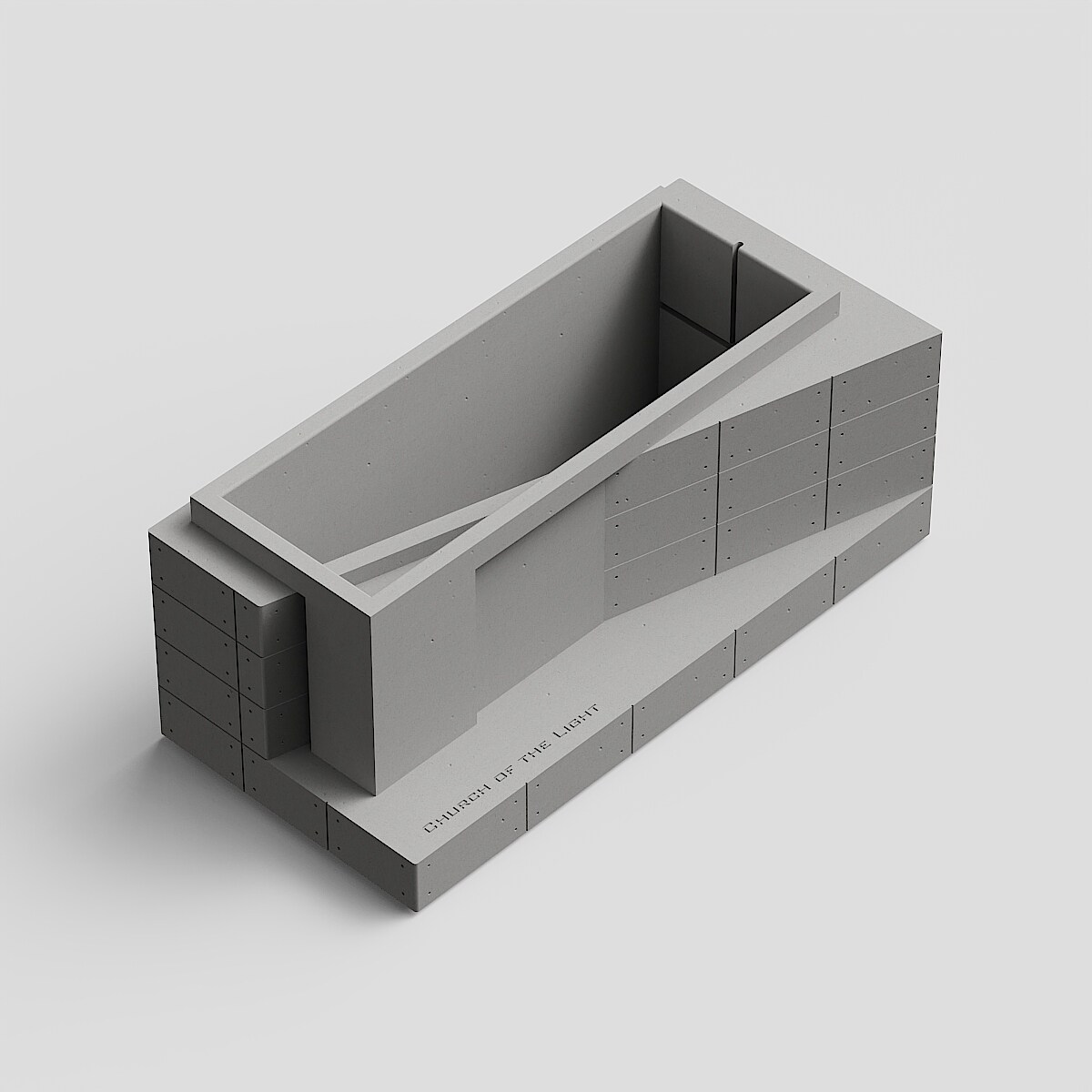
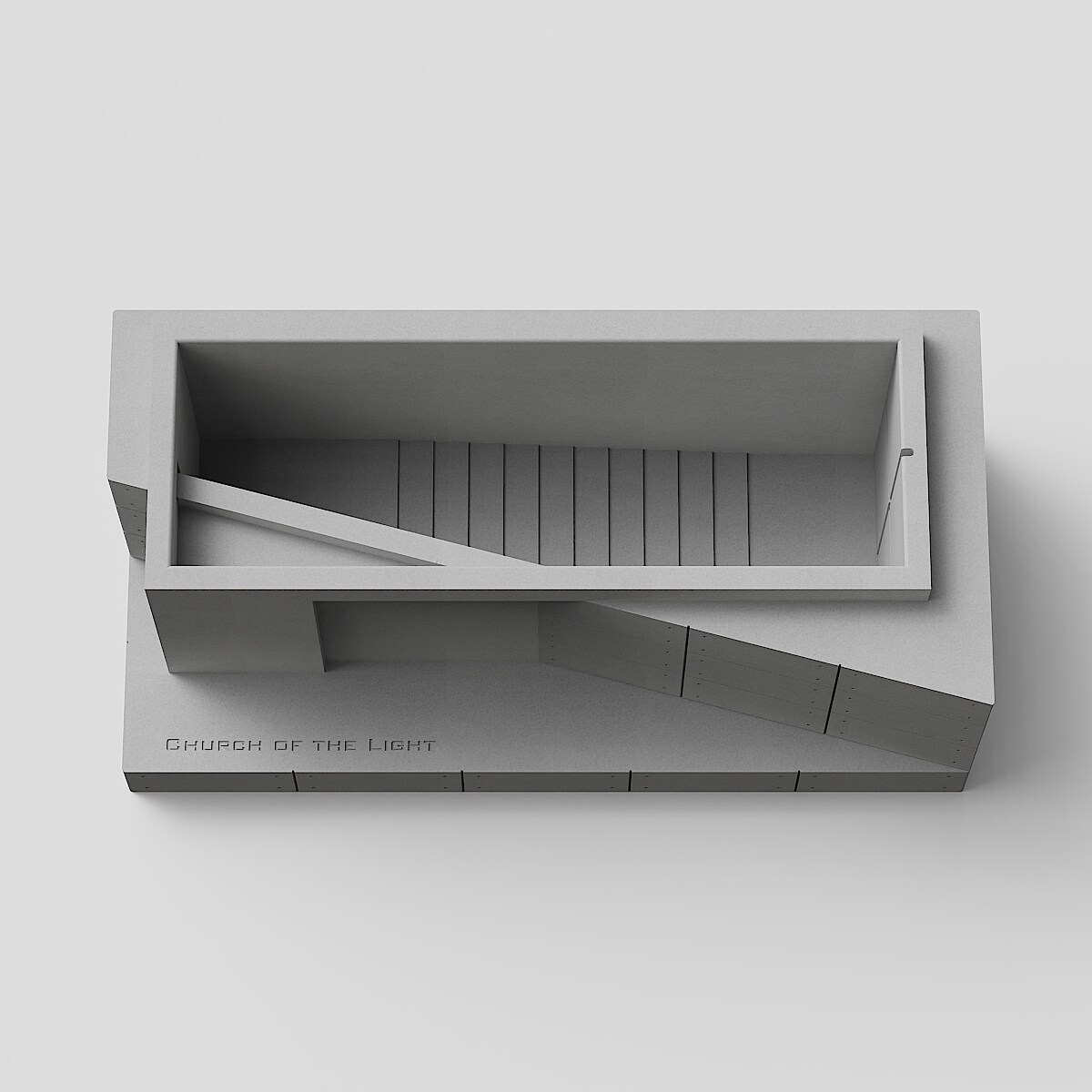
The church needed a chapel, but they also wanted to preserve the old wooden building next door. Ando proposed a bold solution: a freestanding concrete volume inserted into the gap between the old chapel and the adjacent house. The new structure would be completely autonomous — a pure geometric form that made no compromises with its surroundings.
The Cross of Light
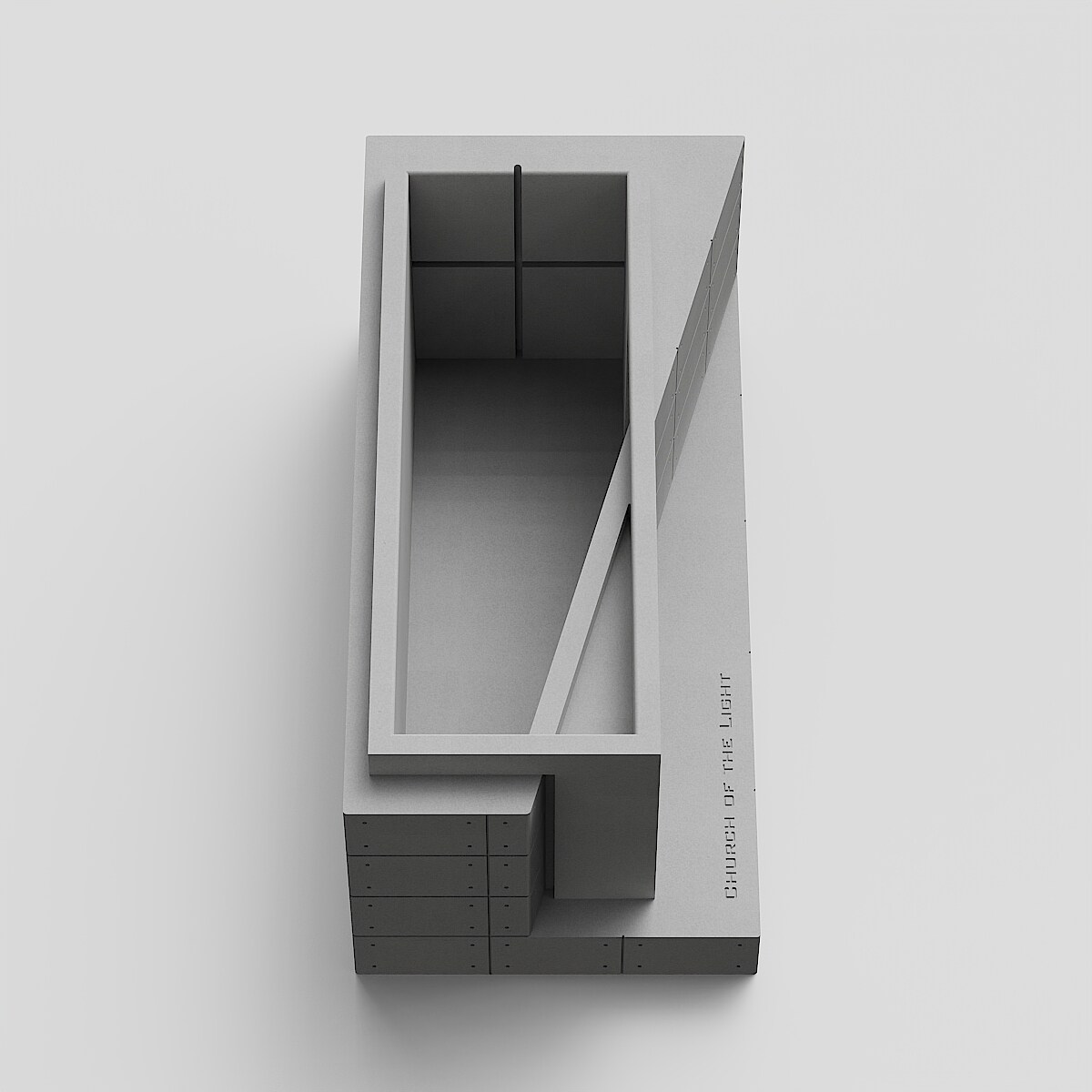
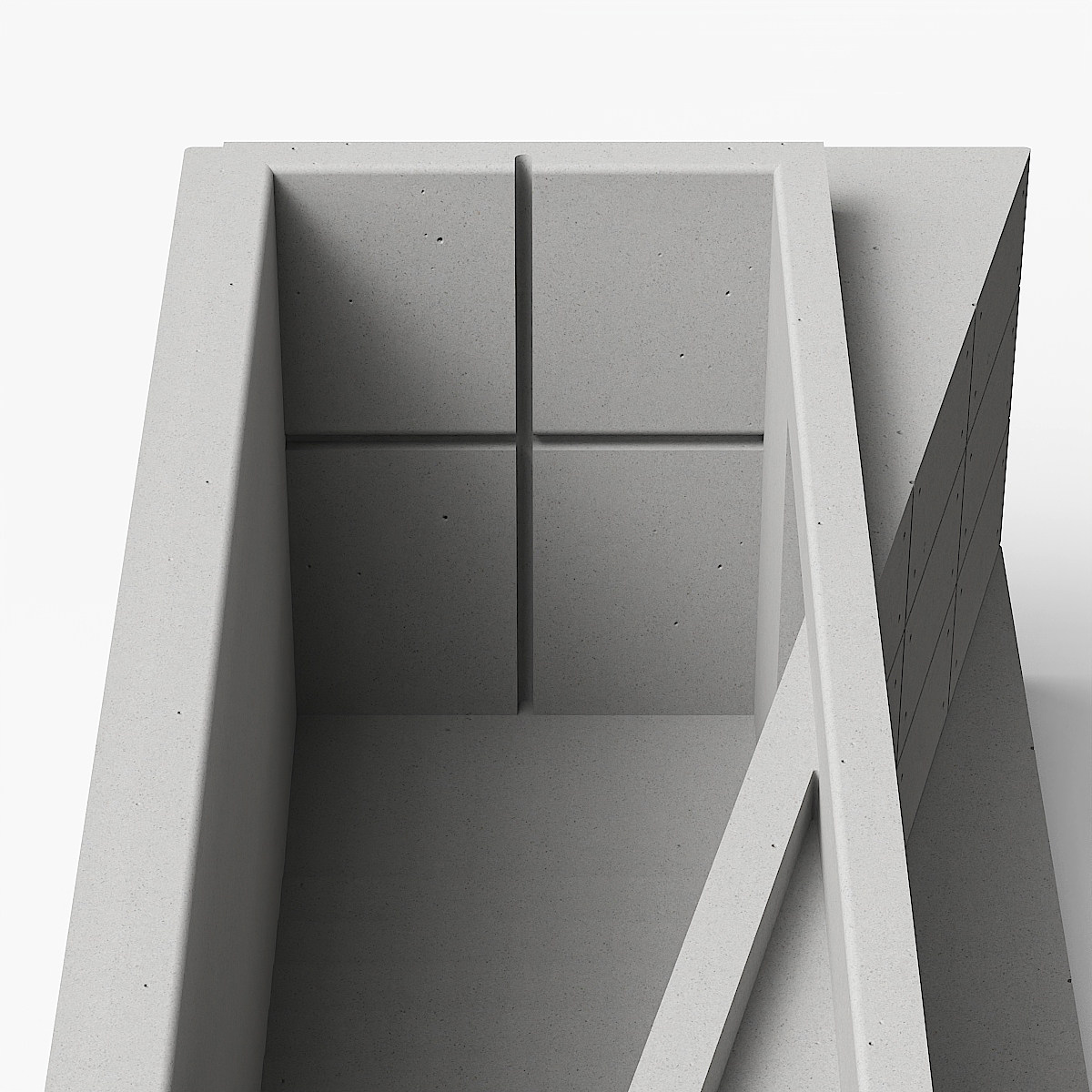
The defining moment of the Church of Light is not the concrete itself, but what is absent from it. Ando carved a simple cross-shaped opening into the east wall behind the altar. When morning light passes through this cruciform aperture, it floods the darkened interior with an ethereal glow — the most powerful use of natural light in contemporary architecture.
The effect is not merely visual; it is visceral. Visitors describe a sense of stillness, of time suspended. The concrete walls, cold and gray by nature, become warm when washed with this light. The darkness is not oppressive but contemplative. It is architecture as experience — not something you look at, but something that happens to you.
Concrete as Material
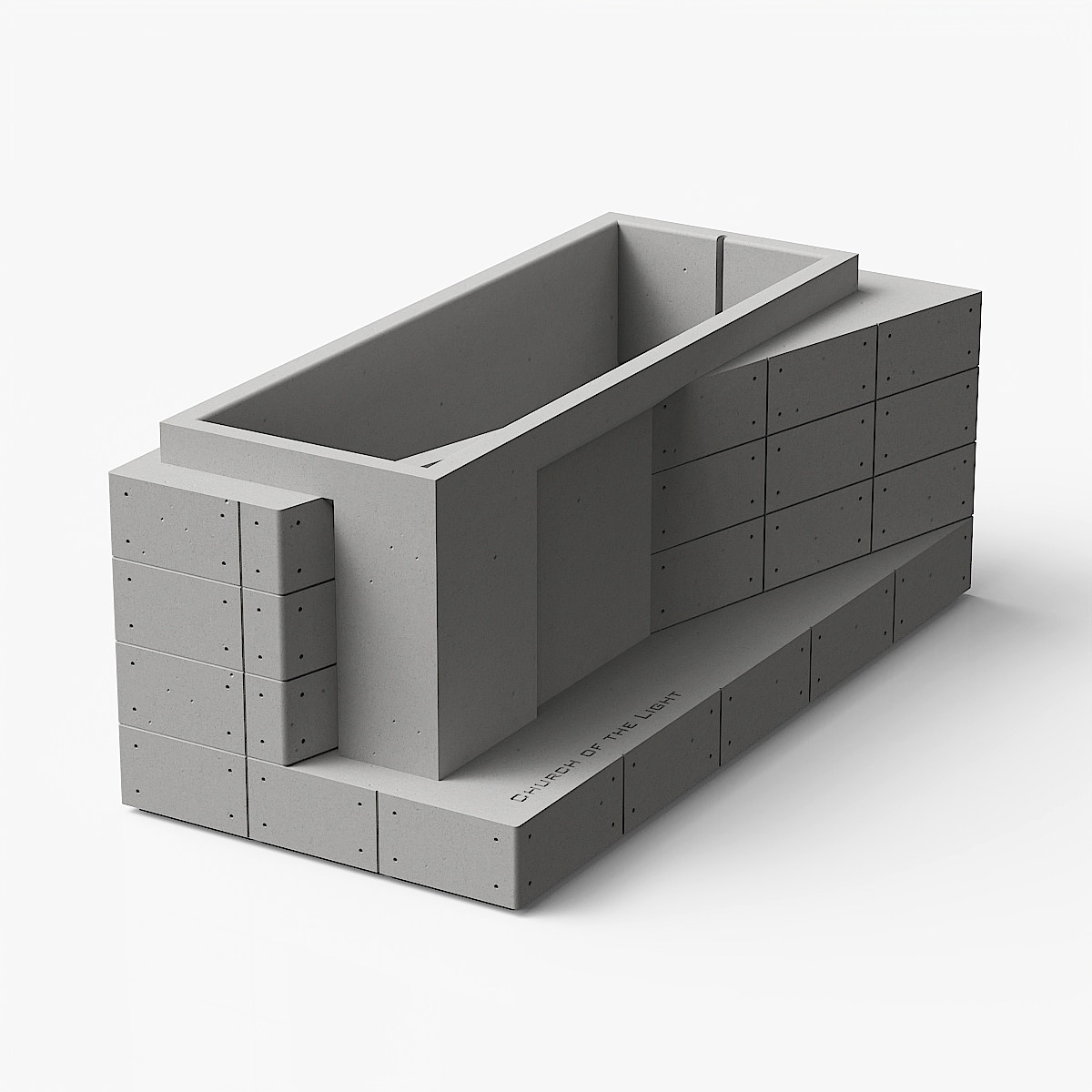
Ando’s concrete is not ordinary. He developed what became known as Ando concrete — a smooth, almost silk-like finish achieved through obsessive formwork precision. The wooden form boards are placed with millimeter accuracy, and the concrete is poured in a single continuous operation to eliminate seams. The result is a surface so refined it resembles stone more than the industrial material we typically associate with parking structures and highway overpasses.
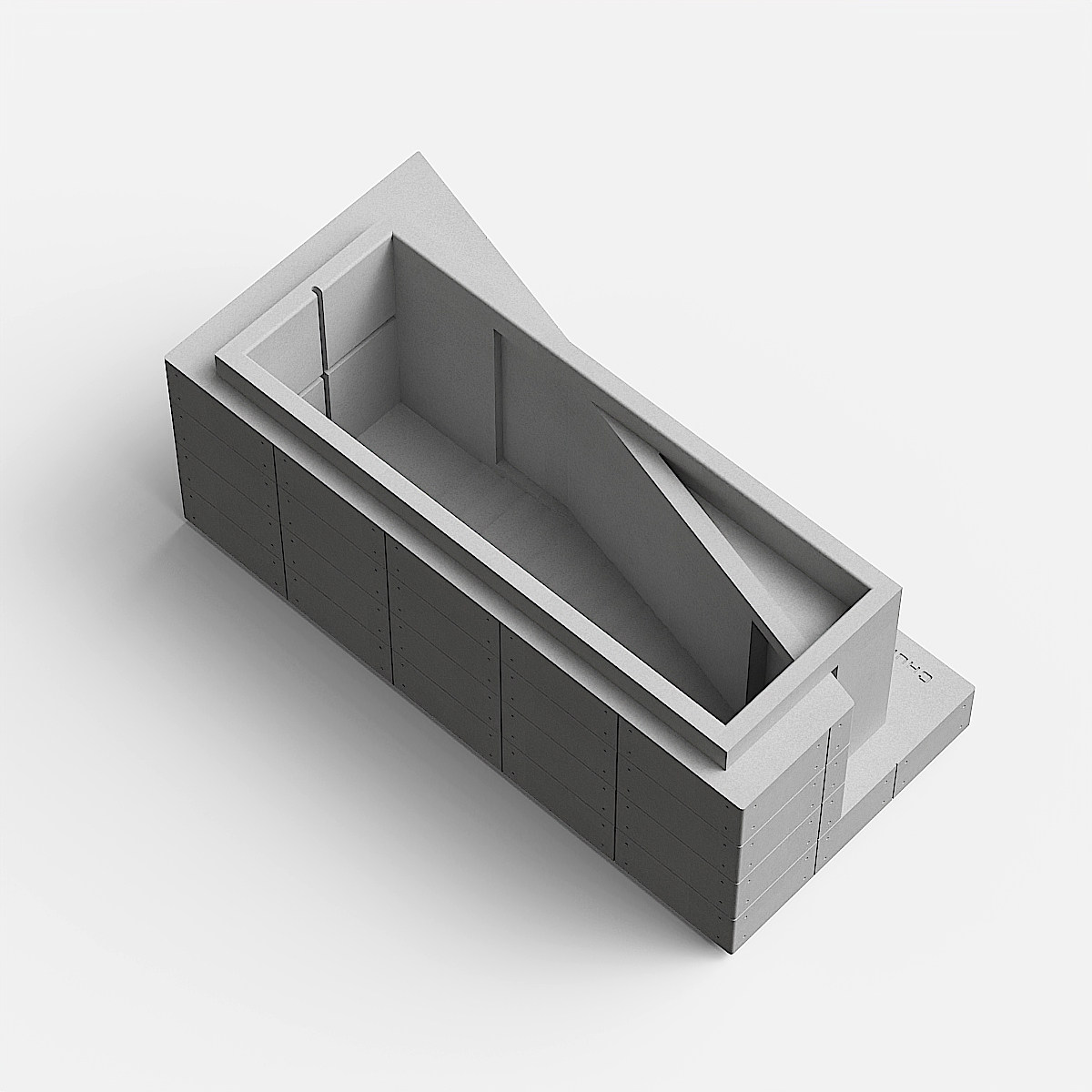
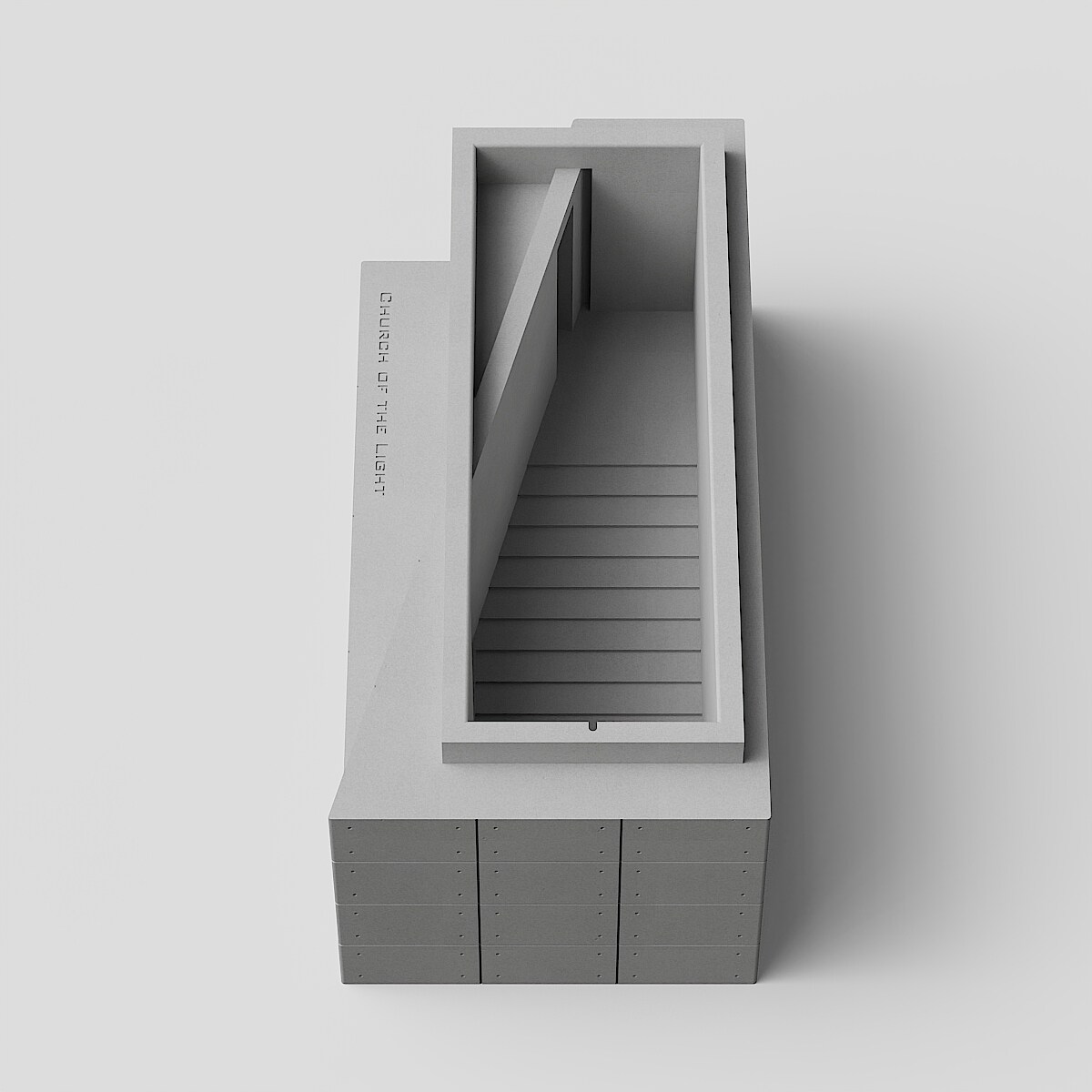
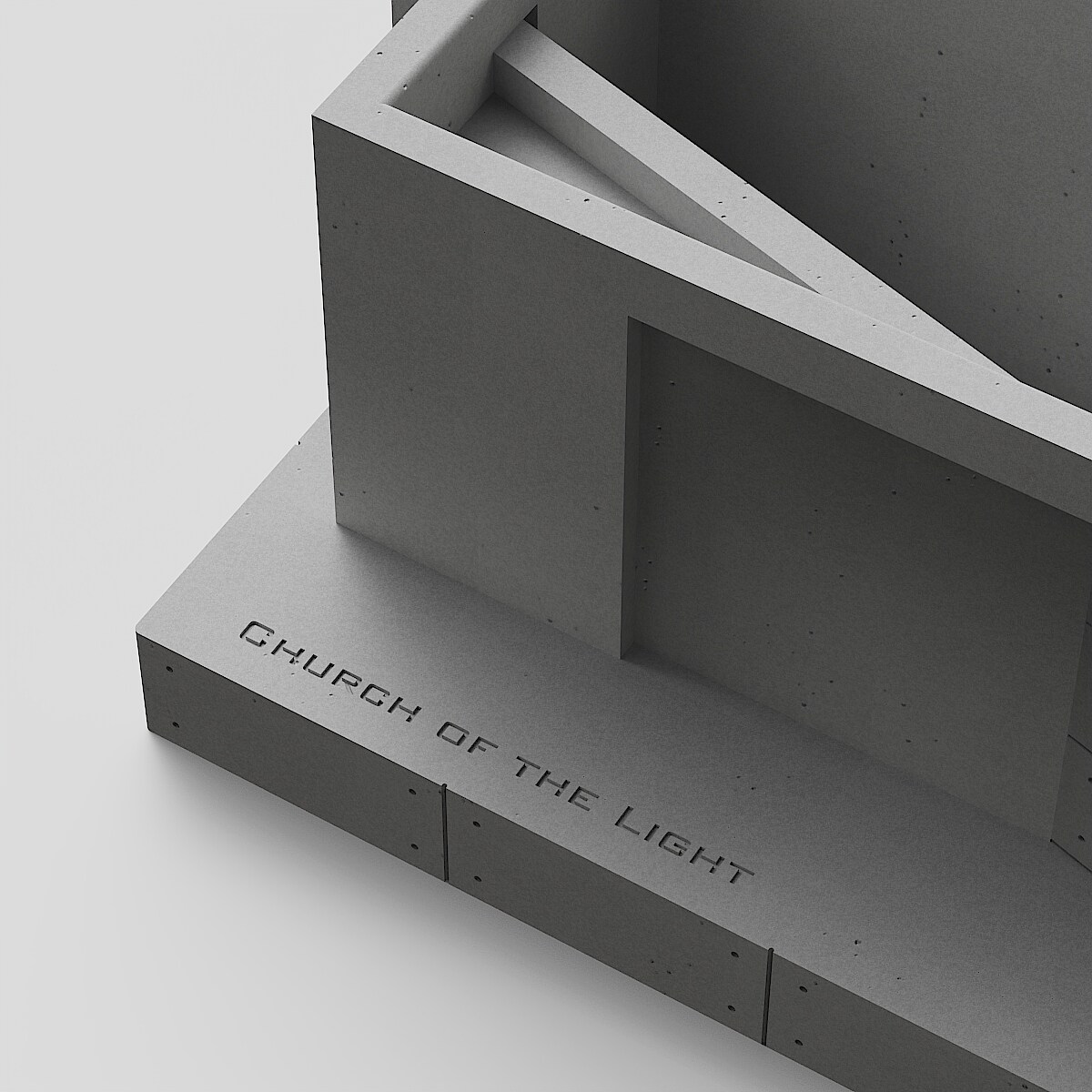
For our sculpture, we honored this same material philosophy. Each piece is cast in architectural concrete — the same category of material Ando specified for the original building. The surface texture, the weight in your hands, the way light interacts with the form: every detail has been considered to capture the essence of the original in miniature.
The Story Behind the Design
Ando was not always an architect. At 17, he was a professional boxer. He had no formal architectural training. He learned by reading books — Le Corbusier’s oeuvre complete, traveling across Europe, Africa, and the United States on a motorcycle, and visiting buildings in person. His education was the world itself.
This autodidactic background gave Ando a freedom that formally trained architects sometimes lack. He was not bound by convention. When the Church of Light commission came to him, he did what no conventional architect would do: he made the chapel dark. Most churches throughout history have chased light — stained glass windows, clerestories, oculus domes. Ando did the opposite. He created a space of profound darkness, then introduced light as a single, piercing event.
I believe that the way people live can be directed a little by architecture.
— Tadao Ando
From Sacred Space to Everyday Object
The Church of Light was completed in 1989. It remains an active place of worship — the Ibaraki Kasugaoka Church still holds services there today. But its influence extends far beyond the congregation. The building has become a pilgrimage site for architecture enthusiasts worldwide, drawing visitors from every continent who come to sit in the silence and witness the morning light.
Not everyone can travel to Osaka. Not everyone can experience that morning silence. But the feeling of the space — the weight of the concrete, the drama of the light, the quiet authority of the form — can be carried with you. That is what this sculpture is about. It is not a model in the architectural sense, with precise floor plans and elevations. It is an emotional translation of a place into an object you can hold.
Why This Piece, Why Now
We live in an age of infinite digital content — feeds, notifications, alerts that never stop. The Church of Light stands as the antithesis of this noise. It is a space defined by what is not there: no ornament, no decoration, no excess. Just form, light, and silence.
Having a physical reminder of that philosophy on your desk is not about decoration. It is about anchoring. When your eyes drift to the cross of light carved into the concrete, you are reminded that the most powerful things in life are often the simplest. That restraint is a form of strength. That what you leave out matters as much as what you put in.
The Details
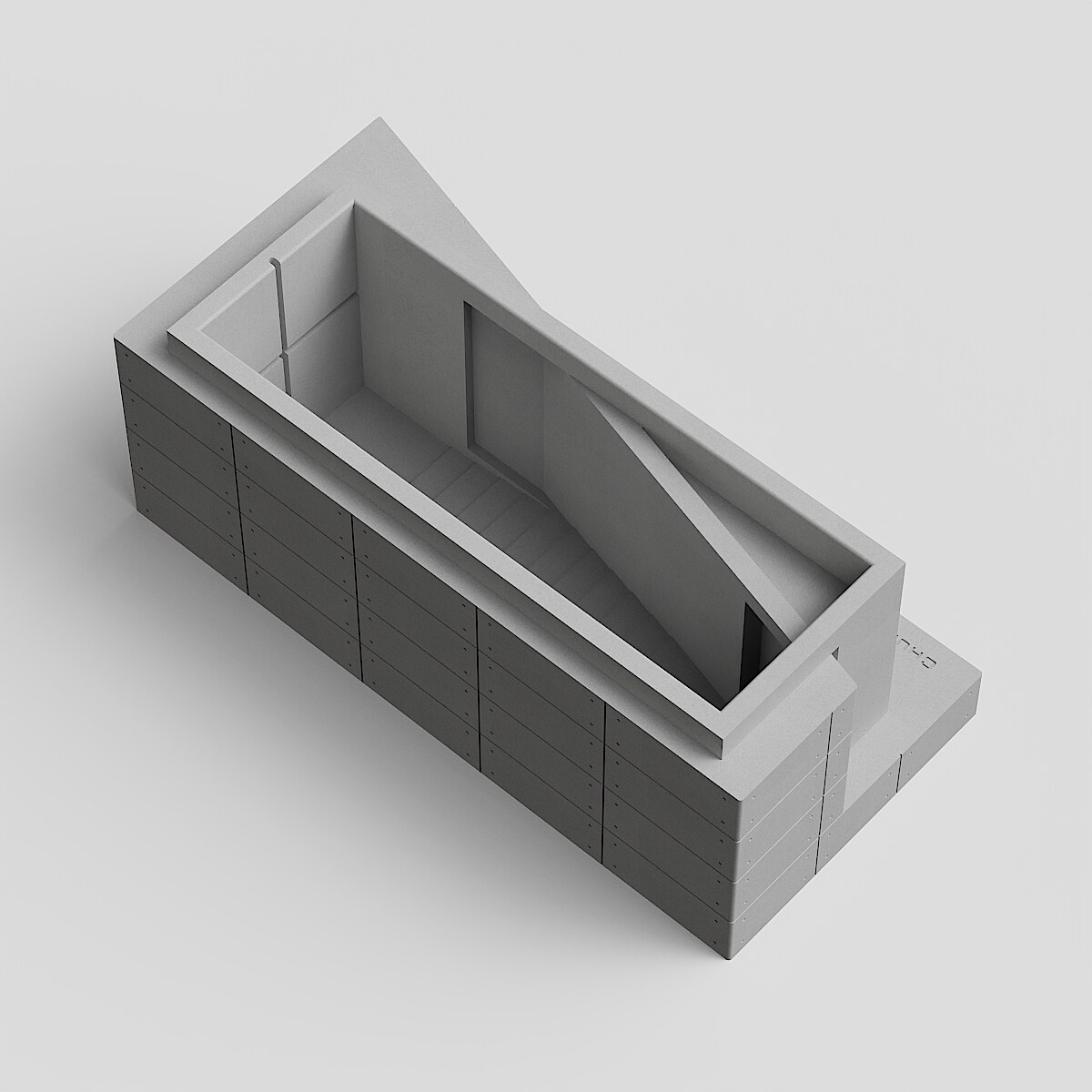
Cast in architectural concrete and weighing 1,450 grams, this sculpture reproduces the Church of Light at a scale that fits in your hands. The dimensions — 210mm × 100mm × 85mm — capture the building’s proportional relationships while remaining a practical desk or shelf object. The surface has been treated to develop the same subtle texture that characterizes Ando’s original concrete work: smooth to the eye, with a faint grain that catches light differently throughout the day.
Each piece is individually cast and finished. No two are identical — just as no two visits to the Church of Light yield the same experience, because the light is never the same twice.
Bring the Light Home
The Church of Light sculpture is available now.
Architectural concrete. Hand-finished. Limited availability.