A concrete desk model inspired by Tadao Ando’s Azuma House, also known as Sumiyoshi Row House.
A memorable building can be recognized before every detail is understood. Reduced to a compact concrete object, its strongest relationships become easier to see: solid and void, rhythm and interruption, weight and light.
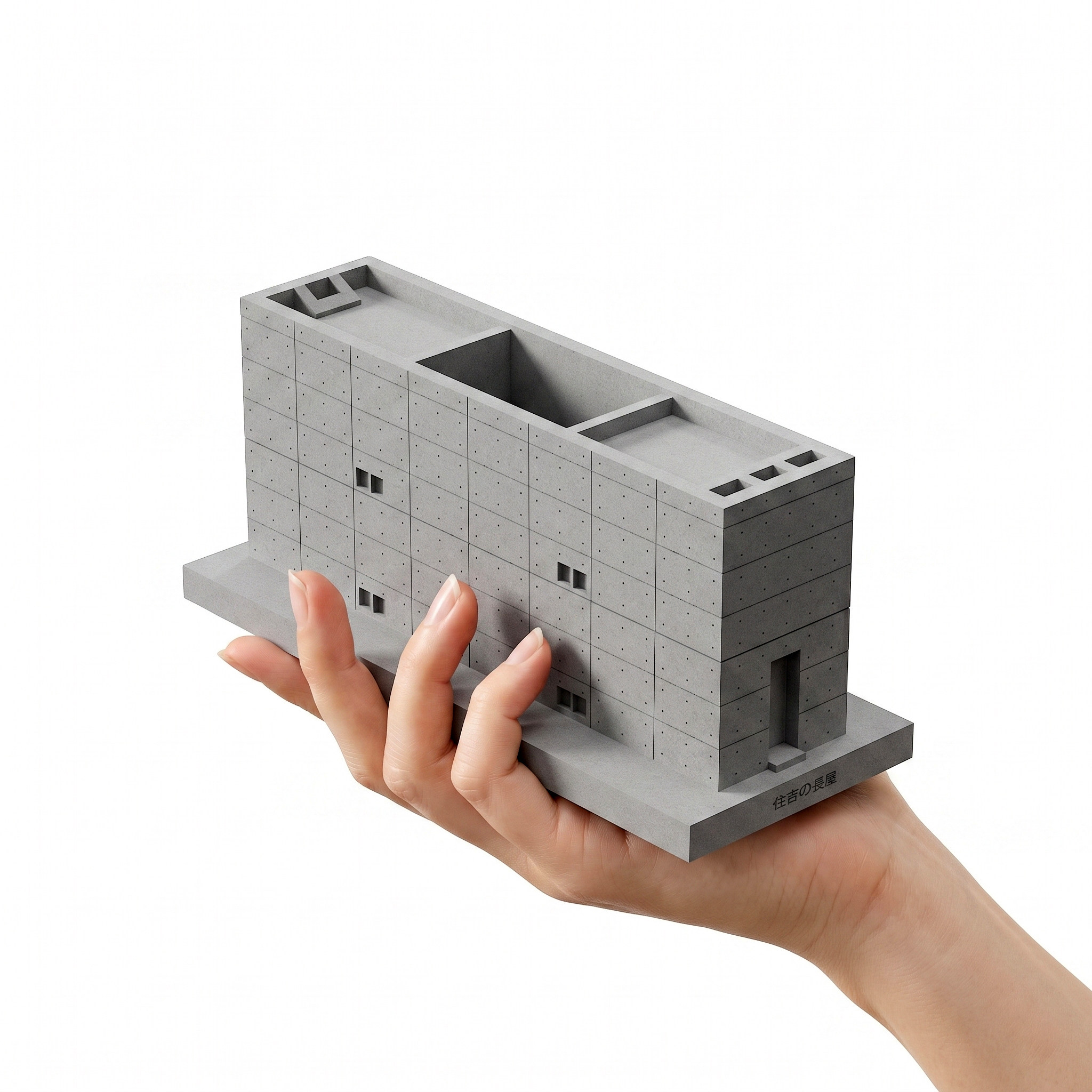
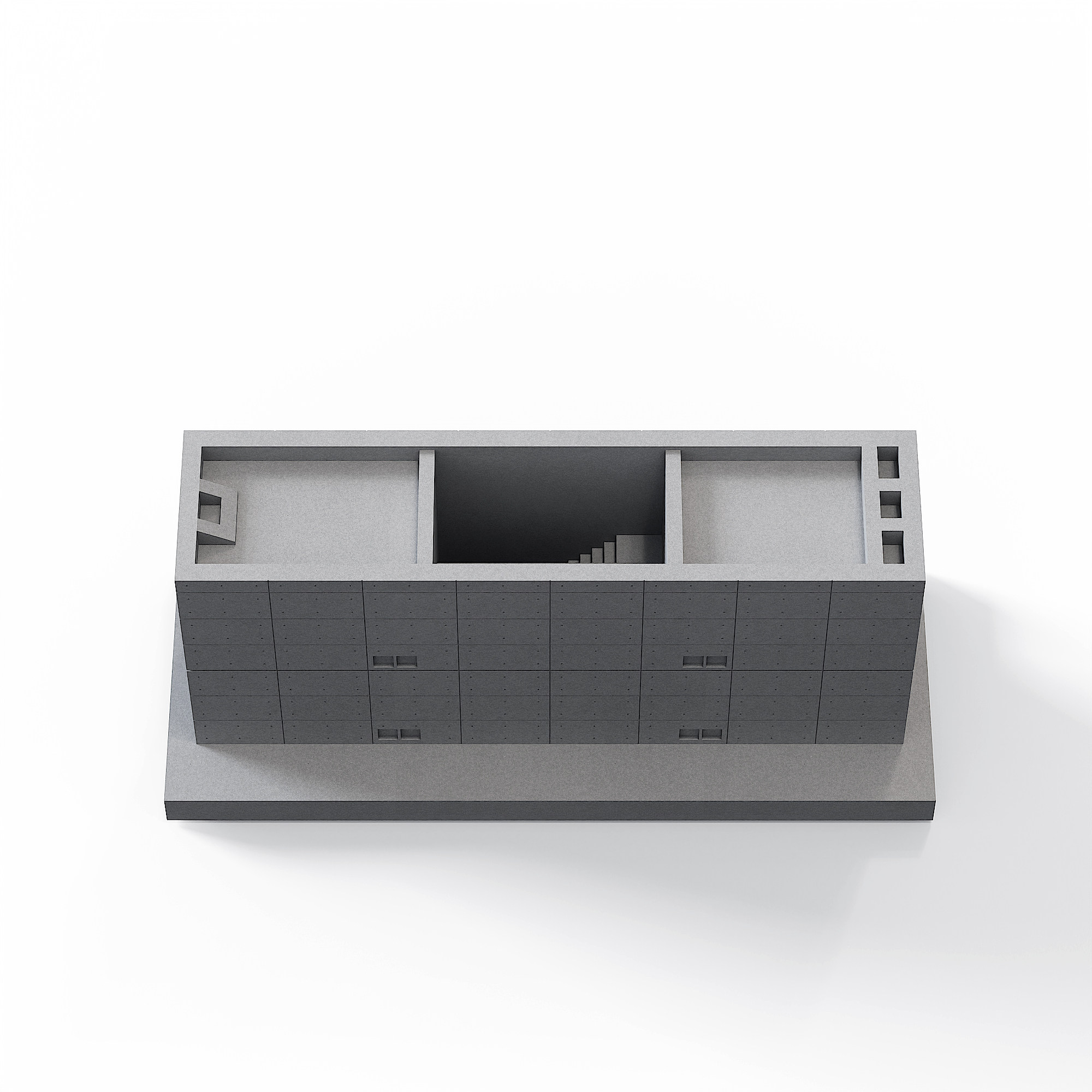
Reading the form of Azuma House
Azuma House, or Sumiyoshi Row House, is one of Tadao Ando’s early defining works: a compact concrete home organized around a courtyard open to the sky. This hand-cast model emphasizes the calm geometry, raw material and central void that make the house so memorable.
Rotate Azuma House from front to side and the relationship between its projections, openings, and upper planes becomes clearer. The 20 × 8 × 8.7 cm format is compact enough to handle while still preserving meaningful depth.
Why concrete suits the idea
Casting Azuma House in concrete keeps attention on mass, rhythm, and void. Fine surface variation prevents the object from looking mechanically flat while the principal edges remain clear.
Concrete gives Azuma House a finish that changes subtly across each face. Rather than hiding every pore, the casting leaves controlled variation that reinforces the object’s weight and material honesty.
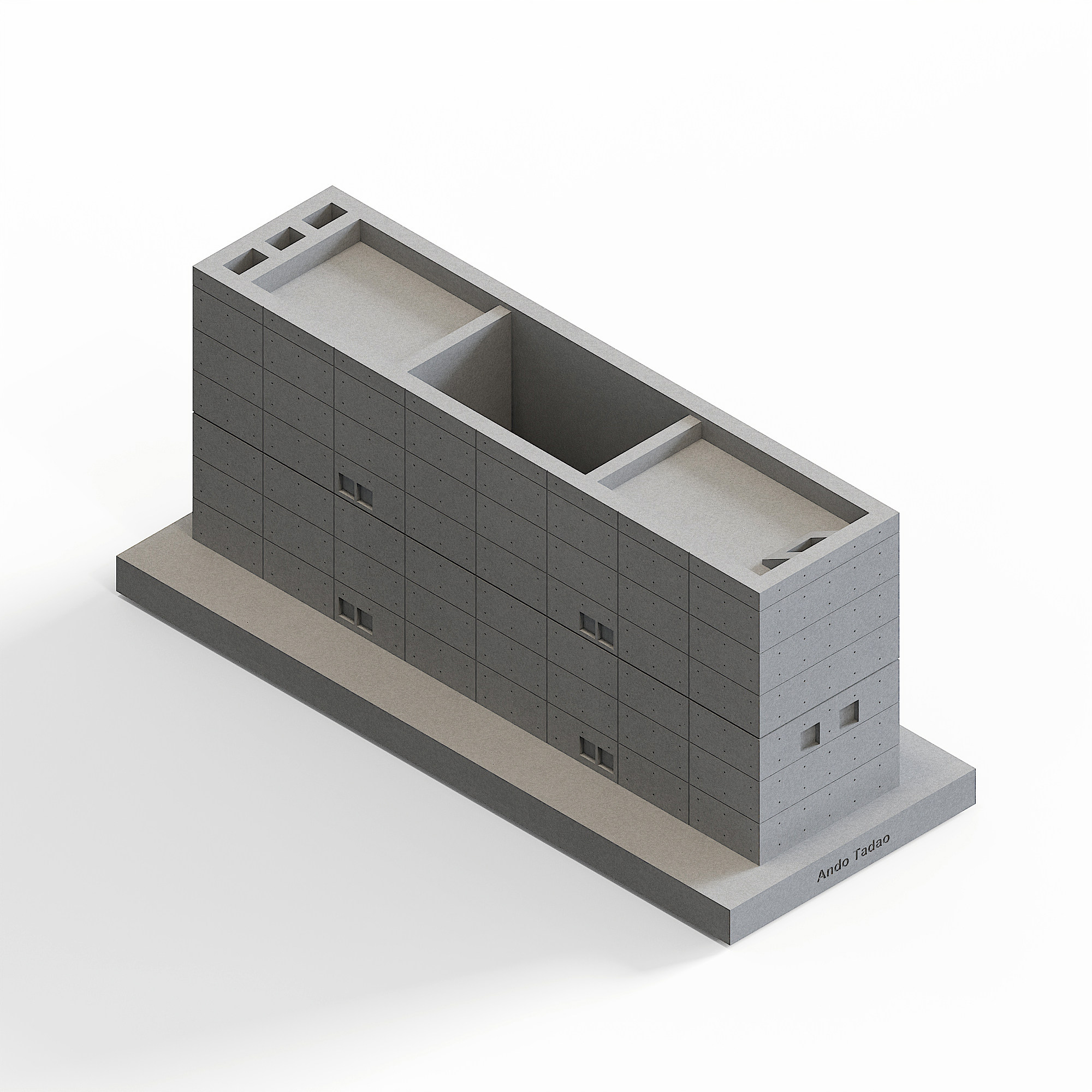
What to notice from different viewpoints
Start with the main elevation of Azuma House, then move to an oblique view to compare facade rhythm with overall depth. A slightly raised viewpoint can reveal roofs, courts, or circulation concealed from the front.
A rotating view of Azuma House makes circulation and massing easier to understand than a single image. Compare opposite sides to see how the composition maintains or breaks symmetry.
Scale, shadow, and close viewing
Azuma House compresses an architectural idea into a 20 × 8 × 8.7 cm object that rewards handling and close observation. Its shadows respond to the room, so the form changes throughout the day.
This makes Azuma House Concrete Model – Tadao Ando Sumiyoshi Row House useful both as a decorative object and as a compact study in material and form. It can stand alone or sit within a collection of architecture, books, and design references.
Where it works
Give Azuma House side light and a little empty space around its 20 × 8 × 8.7 cm footprint. A window or directional desk lamp will deepen recesses without flattening the silhouette.
Collectors exploring Architectural Concrete Models and Japanese Architecture can use Azuma House as a contrasting anchor. Its scale and concrete finish create continuity while the specific geometry keeps the arrangement varied.
Styling concrete with other materials
Azuma House can anchor a small group of books and design references. Pairing it with one contrasting shape is more effective than surrounding it with many models of the same scale.
Warm timber offsets the cool concrete of Azuma House, while dark metal makes its edges feel sharper. Glass or neutral ceramics can add contrast without obscuring the architectural form.
Details to check before choosing
- Inspired by Azuma House / Sumiyoshi Row House in Osaka
- Architect: Tadao Ando
- Material: hand-cast concrete
- Finish: matte concrete surface
- Use: shelf display, desk sculpture, architecture studio decor or collector gift
Allow for the 20 × 8 × 8.7 cm footprint of Azuma House, especially when grouping it with books or other models. Its approximately 1.48 kg mass benefits from a stable surface, and the finish should be kept dry.
A considered object for architecture and design enthusiasts
Azuma House Concrete Model – Tadao Ando Sumiyoshi Row House is suited to collectors, architects, students, and anyone who prefers objects with a clear material identity. Its value comes from the combination of recognizable form, practical scale, and the quiet variation of hand-cast concrete.
View the complete image gallery, current price, dimensions, and availability on the Azuma House Concrete Model – Tadao Ando Sumiyoshi Row House product page.
Explore more handcrafted concrete architectural models inspired by landmark buildings.