Imagine standing beneath the widest unreinforced concrete dome on Earth. Above you, a single circular opening lets in a shaft of daylight that sweeps across the marble floor like a slow, silent spotlight. The Pantheon in Rome is not merely a building. It is a two-thousand-year-old meditation on space, proportion, and the power of a single idea.
Built by Emperor Hadrian around 126 AD on the site of an earlier temple commissioned by Marcus Agrippa, the Pantheon was dedicated to every god in the Roman pantheon. Its name says it all: pan (all) + theos (gods). Yet for centuries, its construction remained an enigma. How did the Romans pour a dome 43.3 meters in diameter using concrete? How did they lighten the structure, layer by layer, from travertine at the base to porous pumice near the oculus, without a single piece of steel reinforcement?
The answer is brutal simplicity. The Romans understood that mass must diminish as it rises, and that geometry, not material, is what holds a building together. The Pantheon is a perfect sphere: the interior height to the oculus equals the dome diameter. That golden ratio, calculated by hand with ropes and plumb bobs, still governs the space today. When Michelangelo first saw it, he reportedly declared it had been built by angels, not men.
The Temple of Light
On the 21st of April, the anniversary of Rome foundation, the sun enters through the oculus and strikes the entrance threshold precisely at noon. Ancient sources suggest this was intentional, a cosmic alignment between the temple, the emperor, and the divine. Rain, too, enters through the oculus, but drains away through 22 small holes in the floor designed for that exact purpose. For two millennia, the Pantheon has remained waterproof. It has survived fires, plundering, and conversion into a Christian church in 609 AD.
The Pantheon is also the most complete surviving monument of Roman antiquity. While the Colosseum crumbled and the Forum turned to pasture, the Pantheon stood firm. Its concrete dome was the largest in the world until Florence duomo was completed in the 15th century. Today, it remains the largest unreinforced concrete dome anywhere on Earth.
The Spirit, Reborn
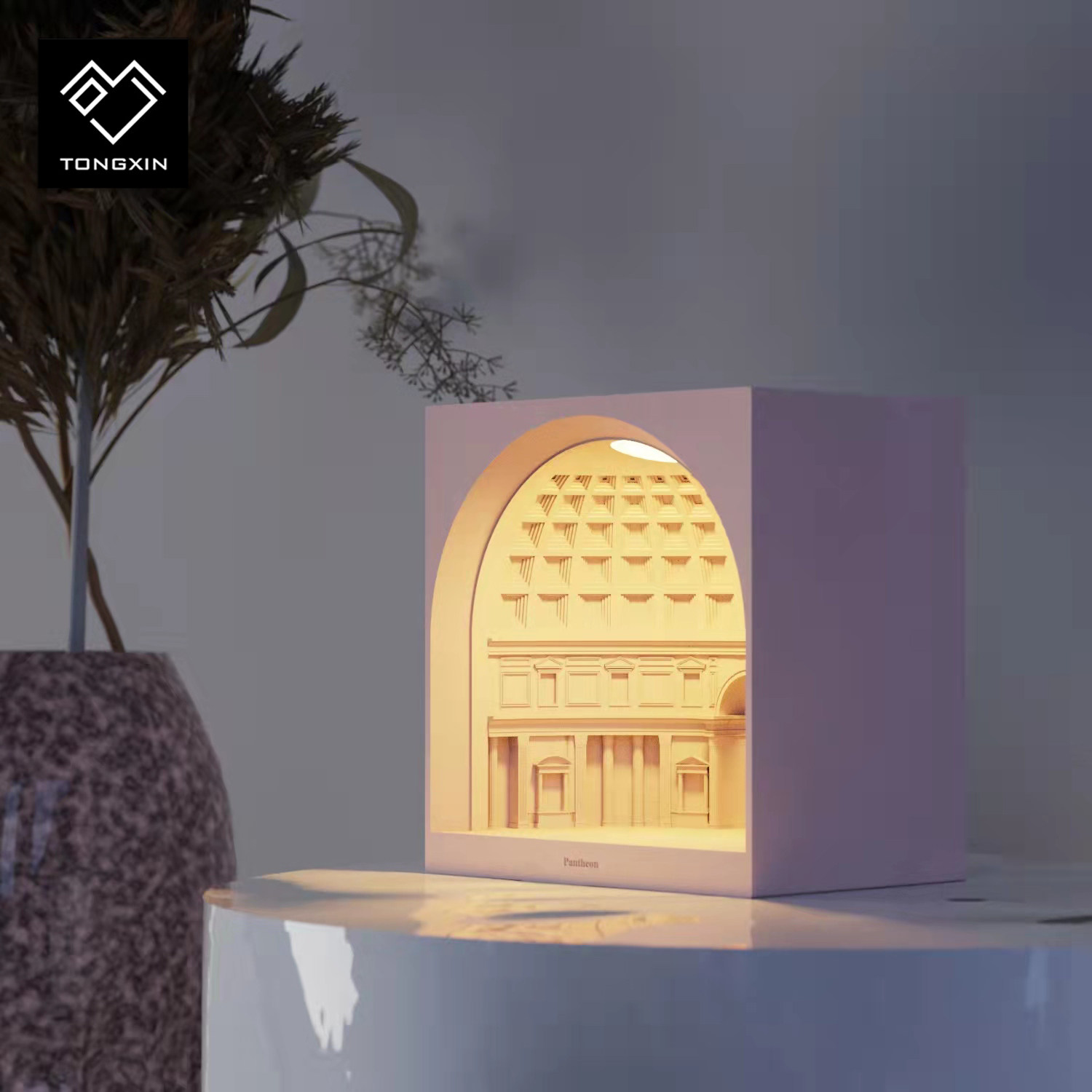
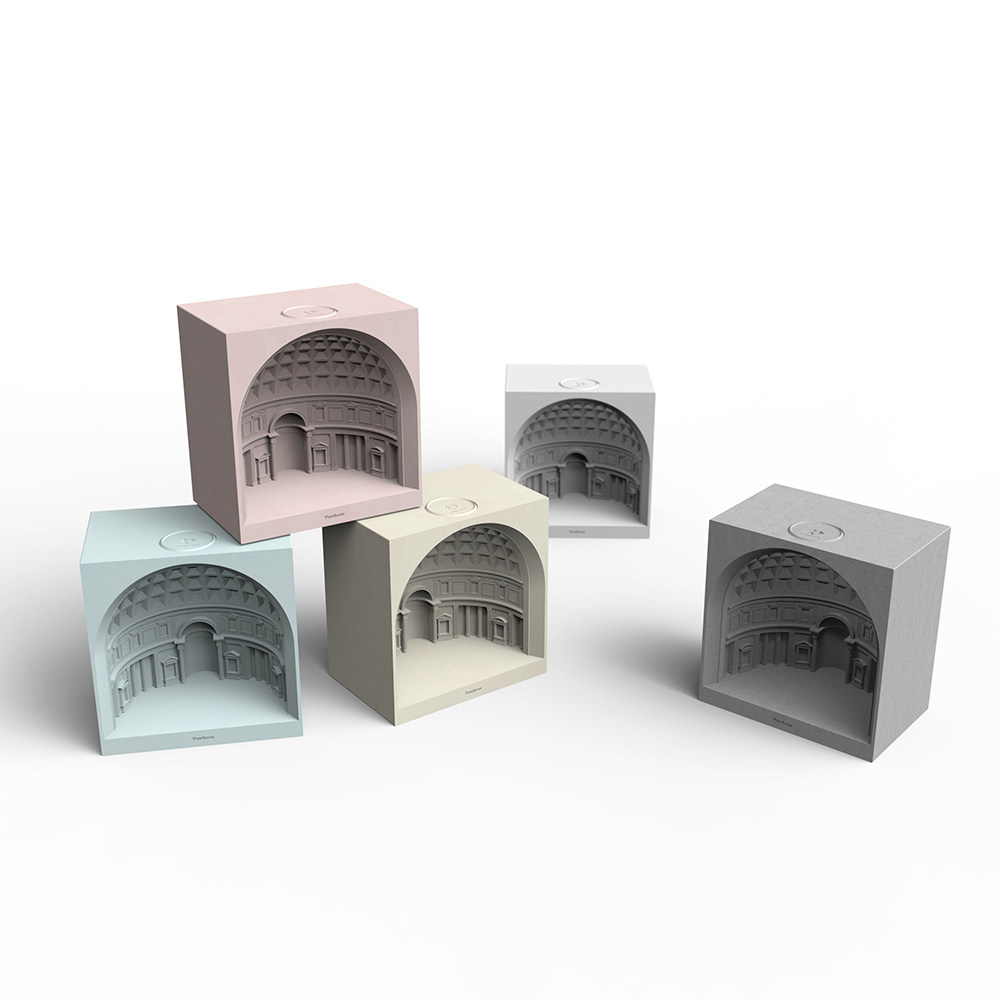
Our Pantheon Architectural Concrete Table Lamp was born from a single question: what if the spirit of this temple could live on your desk? The stepped dome captures the rhythmic geometry of the original. Each tier is cast from the same fair-faced concrete the Romans would have recognized, poured by hand, polished to a satin finish. When lit, the lamp casts a warm, ambient glow through the stepped silhouette, a miniature oculus of light for the modern home.
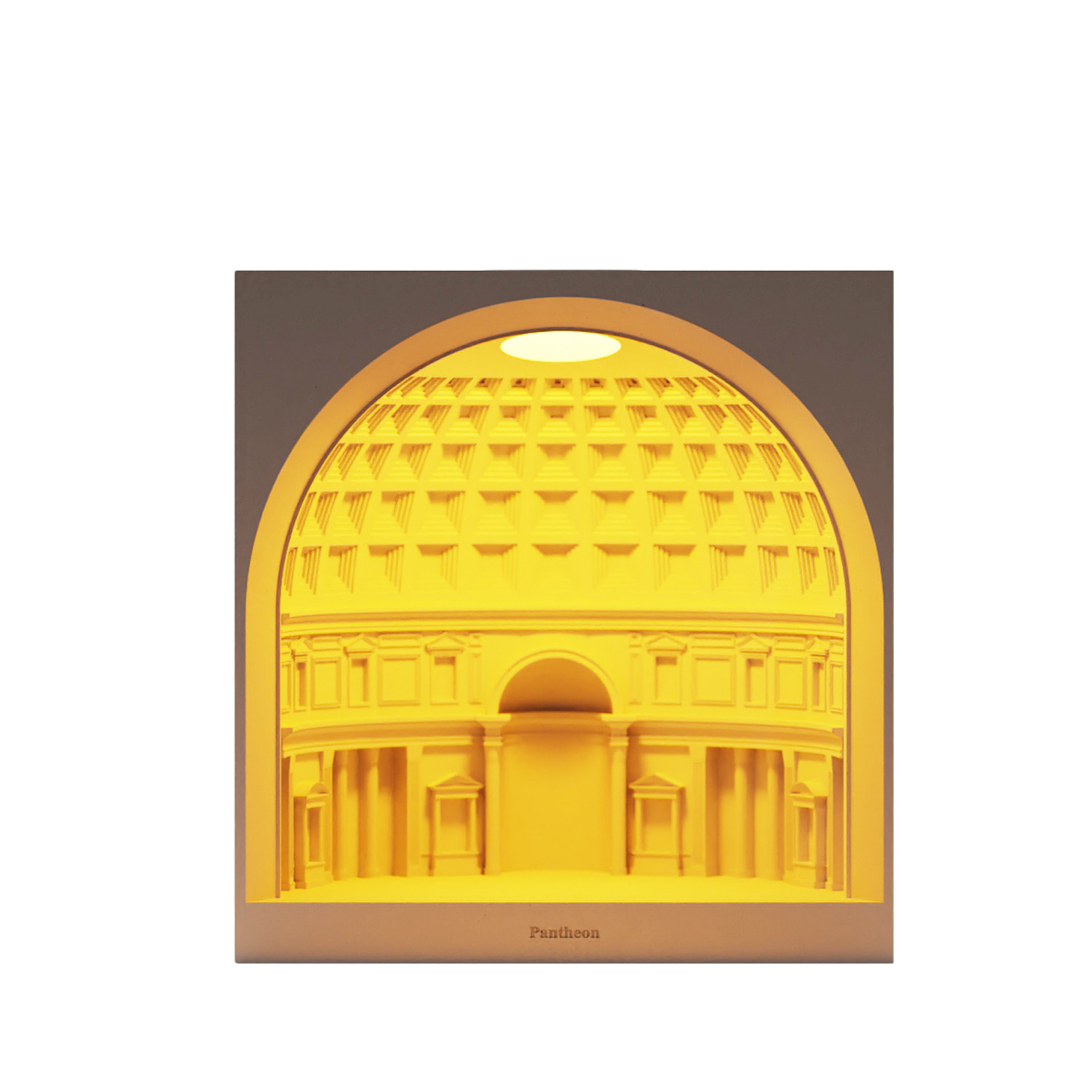
It is not a replica. It is a translation. The Pantheon was a temple to every god. This lamp is a temple to your space, your desk, your quiet hour at dusk when architecture becomes atmosphere and light becomes memory.
Product Details
- Material: Premium fair-faced architectural concrete
- Light Source: LED ambient, warm white (3000K)
- Dimensions: Ø 160mm × H 180mm
- Weight: 2100g
- Power: USB-C, 5V / 2A